|
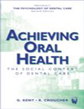
Achieving Oral Health by G Kent
& R Croucher
ISBN 0723610576 Publisher: Wright
Buy
from amazon.co.uk Buy
from amazon.com
Book Description
'Achieving Oral Health' is now in its third edition having been extensively
revised. This well-established book provides an excellent introduction to the
understanding of the role and importance of psychology in dentistry for
undergraduate dental students.
Personal communication between dentist and patient is of primary importance
in dental practice. Dentist-patient relationships can present problems when
patients are nervous or require particular forms of care and an awareness of the
views and expectations of individual. This book provides the means to
understand, prevent and treat many of the difficulties encountered by dentists.
It describes the principles of psychology and sociology applied to dental
practice, giving specific guidelines on the most effective way to deal with
psychological problems, such as anxiety and pain.
This new edition places more emphasis on the link between the sociological and
psychological aspects of care related to public health and health promotion
concerns. Awareness of these issues continues to increase in line with growing
research output, and their importance is stressed in current General Dental
Council Recommendations for the dental undergraduate curriculum. The subsequent
surge in interest and understanding of the issues involved in dental anxiety,
preventive health care, dentist-patient relationships and the care of specific
patient groups means that an updated text covering these areas is extremely
timely.
Contents:
Foreword (Professor F C Smales); Acknowledgements; 1. Challenges for modern
dentistry: Achieving oral health; Aims of the book; References; 2. The social
context of oral health: Definitions of health; What is oral health? Variations
in oral health; Social class; The contribution of the dentist to achieving oral
health; Summary; Practice implications; References; 3. Lay and professional
contributions to oral health: Formal and informal health care activity; Health
behaviour and illness behaviour; Accessing primary dental care; Becoming a
dentist; Summary; Practice implications; References; 4. Helping patients to
achieve oral health: Models of health behaviour; The educational approach; The
motivational approach; Designing a preventative programme; Summary; Practice
implications; References; 5. The nature and causes of anxiety: The nature of
anxiety; The causes of anxiety; Summary; Practice implications; References; 6.
Alleviating anxiety: Modelling; Reducing uncertainty; Emotional support;
Relaxation; Cognitive approaches; Choosing between interventions; Summary;
Practice implications; References; 7. Pain: The experience of pain; Measuring
pain; Alleviating pain; Summary; Practice iomplications; References; 8. Special
groups: Orthodontics; Elderly patients; Patients with handicaps; Mental health
problems; Summary; Practice implications; References; 9. Communication and
consent in dental practice: Communication; Teaching communication skills;
Ethical issues; Summary; Practice implications; References; Index.
Reviews
"... Achieving Oral Health has much to offer the concerned dental
practitioner and student, in helping to understand the needs of their patients.
For the public health professional it gives an insight into the social science
literature that underpins much of the activity surrounding oral health
care." - Gillian Bradnock, Community Dental Health (1998) 15, 286-287
"Good for years 1-4." - Andrew Hill, Senior Lecturer, Psychiatry
& Behavioural Sciences, University of Leeds
|